Build an AI website in 60 seconds
AI generates your personalized website instantly with built-in scheduling, payments, email marketing, and more.
Start for free


AI website creator vs. traditional CMS: which is right for you?


If you’re like most non-technical users, you don’t just wake up thinking, ‘I need a CMS today,’ just to create your own website. You simply want a professional website that works – one that loads fast and doesn’t take up most of your time.
This is usually where the distinction between an AI website generator and a traditional content management system (CMS) starts. A website with AI offers speed, ease, and less hassle, while a traditional CMS, like WordPress, promises freedom and control.
That said, choosing between the two boils down to these factors: how much control you want, how fast you want to move, and how much “heavy lifting” you’re willing to do yourself.
This guide helps you understand the difference between an AI website builder and a traditional CMS tool, their advantages, and decide which is the best option for your needs.
Definitions: AI website creator vs traditional CMS
While an AI website creator and a traditional CMS can help you build a website, both take different paths to get there. So, before choosing, it helps to understand how each one actually works.
Here's how they differ:
AI website builders
Powered by artificial intelligence (AI), website builders handle the full website creation process, from generating pages to editing content and publishing your website. With an AI website creator, you start by describing your business, design preferences, and your site’s purpose. From there, the AI website generator builds the layout, copy, and selects images for you.
Because there are fewer moving parts, you don’t have to deal with plugins, hosting decisions, or manual installs. The AI assistant handles all of these details, making these tools a great fit for non-technical users and anyone without coding experience.
For many small businesses, this means a fully functional website can go live in just minutes. They can also load fast on mobile devices and run on reliable hosting after launch.
Top examples of AI builders include:
- B12
- Wix ADI
- Durable AI
- Framer AI
- Hocoos AI
Traditional CMS
A traditional CMS is built around flexibility. You manage your website using themes, plugins, and a large developer ecosystem that lets you customize almost anything. This flexible setup makes CMS platforms an ideal choice for teams that need detailed content control, custom features, or ongoing web development support.
These platforms also provide full content ownership, so you're responsible for updates, security, and making sure everything works together smoothly and seamlessly.
Examples of CMS platforms are as follows:
- WordPress
- Joomla
- Drupal
- Squarespace
When an AI website creator is the better choice
If you want to opt for an AI website builder, these 4 factors should be the top priorities in your website creation process:
1. Need to launch fast
If getting online quickly is your priority, an AI website generator is an excellent choice. Some platforms ensure a dream website in just a few minutes, generating layouts, content, and visuals automatically.
This speed makes AI builders ideal for small campaigns, MVPs, or service launches where time is critical. You don’t have to wait for a developer or designer to get your site live.
2. Small team, limited dev or design skills
Not every business has a designer or coder on staff, and that’s okay. AI website creators offer drag-and-drop interfaces, guided edits, and a built-in design system that lets users fine-tune their site without touching code.
With tools like B12’s AI Agent, you can update pages using simple prompts written in plain English. The result is a website that looks polished on both desktop and mobile devices, even if you’re not tech-savvy.
3. Service businesses focused on leads or bookings
For coaches, consultants, plumbers, or local shops, AI builders are practical. Many AI builders offer built-in customer relationship management (CRM) features, like forms, scheduling, payment, and invoicing, as well as conversion tools to capture leads and manage bookings.
These features allow you to create landing pages and lead flows without installing multiple plugins or hiring a developer.
4. Built-In business tools
Most other AI website builders come with scheduling, online store functionality, and analytics baked in. Many free AI website builders, like B12, have built-in tools that help improve client engagement and conversion.
This means no hunting for third-party plugins or worrying about compatibility. For small businesses, having all these tools ready keeps projects moving and reduces overhead.
When a traditional CMS wins
There are certain areas where traditional CMS stands out, including these 4 features:
1. Complex publishing workflows or multi-author teams
A traditional CMS works best when many people create and manage content together. It supports user roles, approvals, drafts, and revisions, which helps teams stay organized.
This setup is common for news sites, large blogs, or marketing teams with editors and writers. AI builders usually don’t offer this level of control.
2. Custom plugin requirements
If your site requires specific tools or integrations, a CMS lets you add custom plugins or build your own to match exactly what you need. This flexibility matters when your site relies on unique features or third-party systems. AI builders can feel limited once you go beyond what’s built in.
3. Large-scale content sites
If your site has hundreds or thousands of pages, a CMS is easier to manage. It handles categories, tags, custom fields, and deep content structures well.
For content-heavy sites that grow over time, CMS platforms make an excellent option. Meanwhile, AI website creators may struggle as content volume increases.
4. Custom functionality or headless needs
Some projects require custom backend logic or headless delivery through APIs. A traditional CMS gives developers the freedom to connect content to apps, platforms, or multiple front ends.
This approach works well for complex websites and advanced web development projects. AI builders are usually not designed for this level of customization.
Feature-by-feature comparison
Here are 6 features that will help you compare how AI website creators and traditional CMS platforms stack up against each other:
1. Speed to launch
AI website builders, such as B12, Durable, and Wix AI, are built for speed. You simply answer a few questions, including particular details, such as business type, purpose, tone, and brand. In just minutes, the AI generates a site that’s already live.
Meanwhile, a traditional CMS, like WordPress, usually takes longer because you need hosting, a theme, plugins, and setup time. That extra work adds days, not minutes.
2. Design flexibility
A traditional CMS gives you almost full design freedom. You can change layouts, styles, and page structures if you know what you’re doing or have a developer.
AI website design tools guide you with ready-made layouts and smart suggestions. This approach makes design easier and more controlled, making it an ideal choice for nontechnical users without coding skills.
3. SEO controls
Most AI website builders manage search engine optimization (SEO) fundamentals well. You can edit page titles, meta descriptions, headings, and on-page content. Also, most platforms automatically generate mobile-friendly pages, which helps with search engine indexing.
On the other hand, traditional CMS platforms allow deeper SEO control through advanced plugins and integrations. For users with deep technical SEO experience, this added flexibility makes it easier to fine-tune performance and follow advanced SEO best practices.
4. Integrations
Traditional CMS platforms offer deep integration options through plugins and custom tools, like CRMs, marketing software, and other systems. This high level of control makes CMS an excellent choice for experienced web developers.
Meanwhile, AI website generators, like B12, focus on built-in integrations for common business needs, such as intake forms, scheduling, payments, and email tools. For many small businesses, this simpler approach is easier to manage and more than enough, especially for nontechnical users.
5. Maintenance and security
AI website builders handle hosting, updates, SSL certificates, backups, and security behind the scenes. This means fewer things can break, and you don’t need to worry about patches or system maintenance.
With a traditional CMS, those tasks are your responsibility or fall to a developer you hire. If updates are missed, the site can become slow, unstable, or vulnerable to security issues, which adds ongoing time, cost, and risk.
6. Cost over time
AI site builders usually charge a monthly fee that includes hosting and support. With fixed costs ranging between $12 and $50 a month, they are predictable and easy to budget for.
Traditional CMS sites can be cheaper at first, but costs can add up immediately over time. Aside from the monthly fee, there are other costs to consider, such as domain hosting, paid plugins, and maintenance to close the gap.
For instance, while WordPress is free to download, hosting costs range from $2 to $18 a month, and adding themes and plugins can bring the total to $35-$60 a month.
AI website builder
Traditional CMS
Speed to launch
Design flexibility
SEO controls
Integrations
Maintenance & security
Cost over time
Migration & lock-in: what to ask before you commit
Understanding factors like migration helps avoid hassle when switching platforms. Here are 2 aspects to consider before committing:
1. Ownership, export, and domain control
When choosing a platform, it’s important to know who owns your content, how easily you can export it, and whether you control your domain.
Most AI website builders let you keep ownership of your text and images, but the platform may retain control over the underlying code or templates, and exporting can be limited. CMS platforms, on the other hand, give you full ownership on content, themes, and plugins. They also allow easy export of databases, media, and site structure.
Domain control is also key, as some AI builders tie your domain to their system, while CMS setups let you register and manage your domain separately.
2. Portability considerations
Consider how easy it will be to move your site in the future. Some AI website builders lock designs, templates, or layouts, which can make migrating to another platform more complicated.
Meanwhile, traditional CMS platforms generally offer more flexibility, letting you export content, media, and site structure with fewer restrictions. However, moving a large CMS site still requires careful planning and some technical knowledge.
Thinking about portability early saves you time and prevents frustration. It also avoids unexpected costs down the line.
How B12 combines AI speed with “business website” needs
As one of the best AI website builders, B12 combines the speed of AI with the practical needs of real businesses. It helps you launch a professional site quickly while still supporting growth, leads, and everyday operations.
Here are 3 ways on how B12 does it:
1. Publish-ready sites
B12 uses AI to generate websites that are ready to go live immediately. The layouts, copy, and images are designed to look professional and work on both desktop and mobile devices.
You can explore examples in B12’s prompt website gallery to see how the AI turns business descriptions into polished sites. Small and mid-sized businesses can also browse the industry website library for inspiration from sites tailored to their sector.
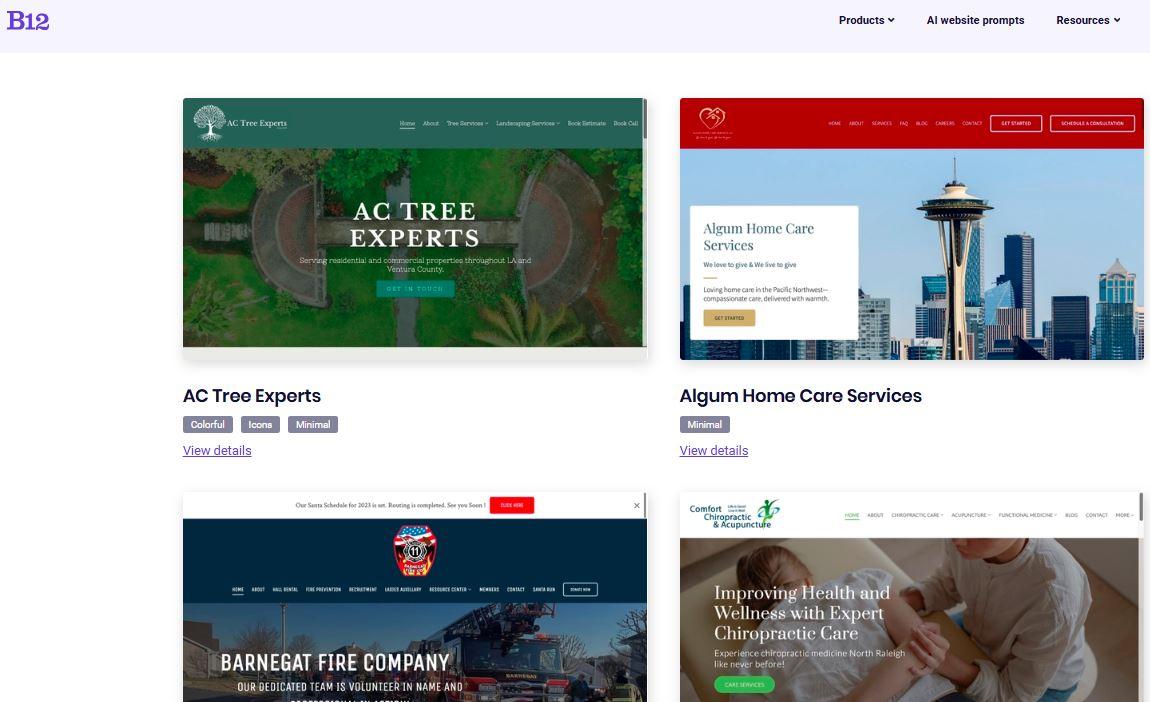
These features help you create AI prompts to create a professional website, and then launch quickly without spending weeks on design or coding.
2. Built-in tools
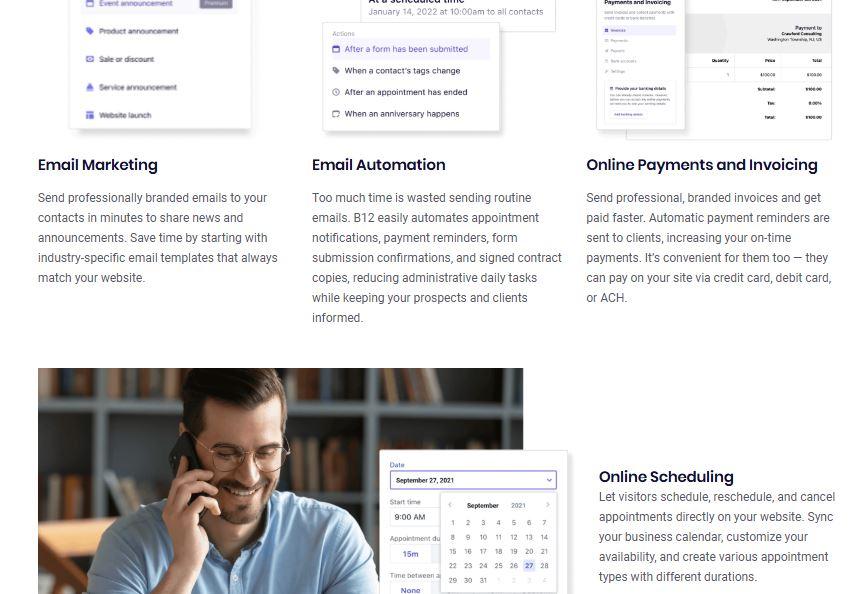
The platform comes with built-in tools for scheduling, forms, payments, and email, as well as conversion tools to capture leads and drive sales. You don’t need to install multiple plugins or worry about compatibility issues.
These tools make it easy to turn a fully functional website into a real business asset that starts generating results from day one.
3. Optional human help
If you need more customization or guidance, B12 offers optional support from its creative services team. Experts can fine-tune layouts, copy, or integrations to meet your specific goals.
This blend of AI efficiency and human insight ensures your site is not only fast to launch but also optimized for performance and growth.
Launch your dream website fast with an AI website builder today!
Choosing between an AI website creator and a CMS like WordPress or Joomla comes down to your goals and timeline. If you want a business-ready, user-friendly site that’s live in minutes with minimal effort, AI builders like B12 are the way to go. CMS platforms shine for complex sites, advanced workflows, or long-term customization, but they require more technical know-how and effort to manage plugins, integrations, and ongoing costs.
With built-in SEO fundamentals, integrations, and optional expert support, AI builders simplify the process while still giving you control over your site’s growth.
Try B12's AI website builder today and launch a professional website within a day, complete with built-in tools and human support!
Look professional online with tips from B12
Receive our email newsletter for advice on how to grow your business and engage clients.
Draft your site in 60 seconds
Get an AI website made specifically for you that's free to launch.
Start for free ✨No credit card required
Related posts


Spend less time on your website and more time growing your business
Let B12 set up your professional online presence with everything you need to attract, win, and serve clients.