How to start a dog walking business in 2026


To start a dog walking business, first pick the services you'll offer. Then set your rates, register the business and get pet care insurance. Find your first clients through neighbors, local groups and a simple website where people can book you. To start, you need a few sturdy leashes, poop bags, a basic first-aid kit and reliable transportation.
This guide covers each step for people in the US starting part-time or as a side business.
Quick answer: how to start a dog walking business
- Decide on your dog walking services and service area.
- Set your rates.
- Register the business and open a business bank account.
- Get insurance.
- Learn the basics of dog handling and pet first aid.
- Set up booking, intake and payments.
- Find your first clients.
- Grow with repeat clients, add-on services and help.
Is a dog walking business worth starting?
Startup costs are modest. BusinessesForSale.com puts typical startup costs at $2,000 to $5,000, covering things like registration, permits and insurance.
There are some downsides. Your income depends on how many dogs you walk in a day, the work happens in every kind of weather, and one bad incident can cost you a client.
Step 1: Decide on your services and area
Start with a short menu so clients can book without a phone call:
- Solo walks (30 or 60 minutes)
- Small group walks (with extra care for large breeds)
- Puppy visits and potty breaks
- Drop-in visits for cats or older dogs
- Overnight pet sitting, if you want to add it later
Make daily walks your main offering and add the rest as you go. Pick a tight service area at first. Walks are short, so driving time eats into your earnings fast.
It's also worth writing a short business plan. It helps you spot risks early and makes it easier to get funding if you decide to grow.
Step 2: Set your rates
HomeGuide puts the average at $20 for a 30-minute walk and $40 for an hour. Rates vary a lot by city, so check what walkers near you charge on local sites and apps, then decide where you fit.
Charge more for extra dogs from the same home, holidays and last-minute bookings. Some walkers charge by the half hour or by the mile for longer routes, which works well in spread-out suburbs. Offer weekly packages, too, like five walks for a set price, so clients commit and your schedule stays full.
Step 3: Register your business
Pick a name and structure
Choose a name that's easy to say and spell, and check that the domain is available. A sole proprietorship is the simplest setup.
An LLC separates your personal assets from the business, which many walkers like since they're responsible for other people's pets. If you go the LLC route, budget for your state's filing fee.
Licenses, EIN and banking
Check whether your city or county needs a business license. Get a free EIN from the IRS and open a separate business bank account, so payments and expenses stay out of your personal account. You'll need the EIN anyway if you hire help later.
Step 4: Get insurance
FitBark recommends three kinds of coverage for dog walkers: general liability, animal bailee insurance and veterinary expense reimbursement. General liability covers injuries or damage to other people. Animal bailee coverage protects you if a dog in your care is hurt or lost.
Step 5: Learn dog handling and pet first aid
Dog walkers don't need a formal license or degree, but training makes you safer and easier to hire. FitBark notes optional certifications that cover leash handling, multi-dog walks and emergencies. Pet Sitters International also offers a free startup guide and a certification for professional pet sitters.
Whatever you take, learn how to read dog body language, handle a dog that slips its collar, and spot heat exhaustion.
Step 6: Set up booking, intake and payments
Texts and handwritten notes stop working once you have a few regulars. Set up one place where clients can:
- See your services and prices
- Book or request a walk
- Share their dog's details: vet, feeding, quirks, key or door code
- Pay online, with receipts
A good intake form captures behavior, medical conditions, allergies and vaccination status, so you aren't guessing on the first walk. Write a clear cancellation policy, too. It protects your income when clients cancel at short notice.
Build it with B12
With B12, you build your site by chatting with the AI Agent. Describe your services and area, attach a few photos of the dogs you walk (with their owners' OK), and B12 builds the pages, booking and forms. Add a service or change a price later the same way.
Try prompts like these:
- "Build a site for Two Leashes, a dog walking service in Austin's Zilker neighborhood, with 30- and 60-minute walks and weekly packages."
- "Add a booking page where clients pick a walk length and day."
- "Add a new-client form that asks for the dog's name, breed, vet and any behavior notes."
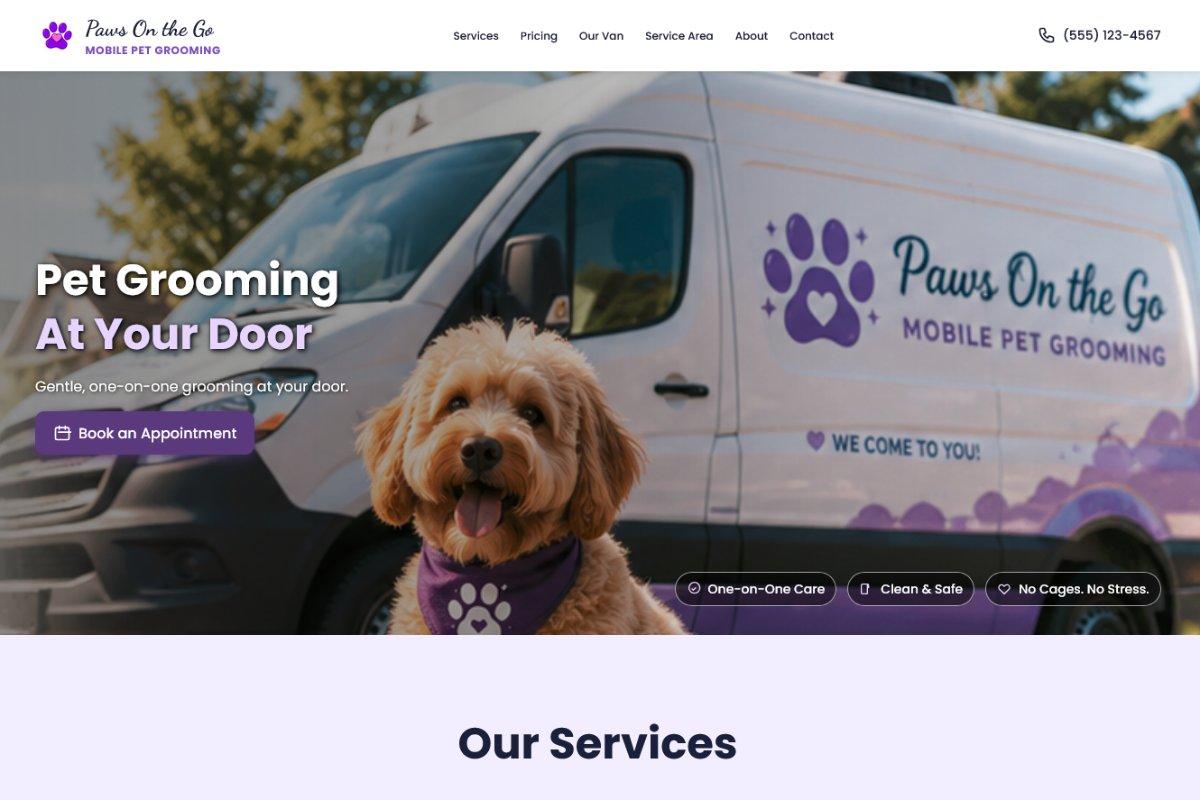
You can launch free on a b12sites.com address. Online booking works on every plan, including Free. Using your own domain comes with the Website plan, and client intake forms come with Website + Client Engagement. Want a starting design? Try the mobile pet grooming template and ask the Agent to switch it to walks.
Step 7: Find your first clients
- Your neighborhood: tell neighbors, post in local Facebook groups and on Nextdoor, and put a flyer up at the vet, groomer and pet store.
- A free first walk: a meet-and-greet lets the owner see how you handle their dog before they book.
- Google Business Profile: set one up so you show up when people search for a dog walker nearby.
- Photo updates: send a photo and a short note after every walk. Owners notice, and some will share them with friends.
Ask happy clients to tell a friend. In a dense neighborhood, one referral often leads to the next.
Step 8: Grow your business
Once your weekday schedule is full, raise rates for new clients, add pet sitting, drop-in visits or overnight boarding, and consider hiring a second walker. If you hire, think about switching from a sole proprietorship to an LLC, and make sure your insurance covers employees before their first walk.
Group walks pay better per hour, but they also raise your risk, so make sure your liability coverage includes them. Test how dogs get along before adding a new one to the pack.
Frequently asked questions
How much should I charge for a 30-minute walk?
About $20 is average, according to HomeGuide, but rates swing a lot by city. Check what walkers near you charge and price for your area.
How much money can you make from a dog walking business?
It depends on how many walks you can fit in. At HomeGuide's $20 average, ten 30-minute walks a day, five days a week, is about $1,000 a week before costs like insurance, gas and taxes. The typical range for US dog walkers is $29,000 to $44,000 a year, according to Salary.com.
Can I make a living as a dog walker?
Yes, especially in dense neighborhoods where lots of people have dogs and walks are close together. Group walks let you earn from several dogs in the same hour, and pet sitting fills gaps in your schedule.
Do I need a license to be a dog walker?
There's usually no dog walking license, but your city or county may require a general business license. Check locally before your first paid walk.
Build a website, store, or web app by chatting.
Describe your idea and B12's AI builds it: pages, copy, and the working parts like logins, payments, and bookings. Get a solid first draft, then make it yours.


